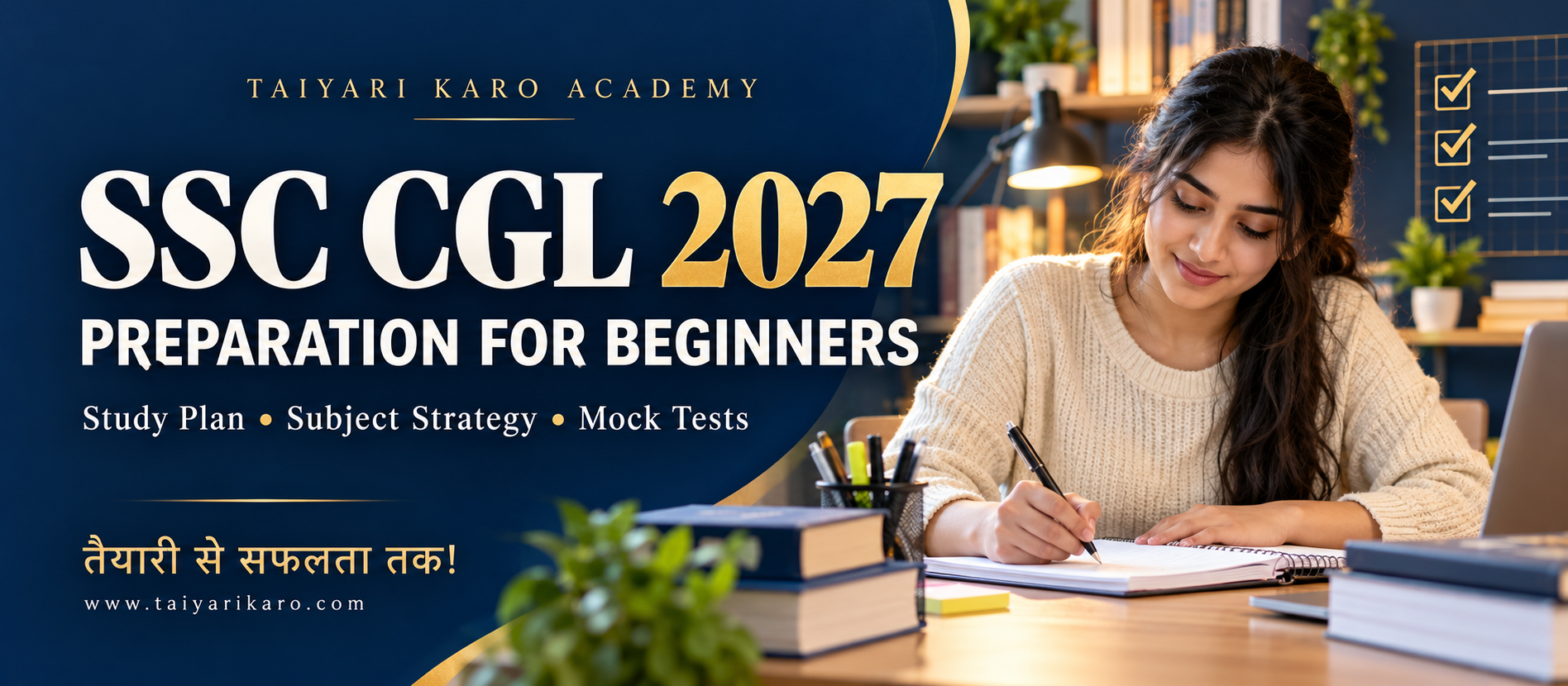

SSC CGL 2026: Complete Preparation Strategy and 90-Day Study Plan
Preparing for SSC CGL can feel challenging when you look at the complete syllabus. However, with the right strategy, consistent practice, and proper time management, you can make your preparation more organized and effective.
The Staff Selection Commission Combined Graduate Level (SSC CGL) examination provides opportunities to work in various central government departments and ministries. Candidates should understand the latest examination notification, eligibility criteria, syllabus, and selection process before beginning their preparation.
In this guide, we will discuss the SSC CGL syllabus, subject-wise preparation strategy, a 90-day study plan, daily timetable, mock test analysis, and common mistakes to avoid.
1. Understand the SSC CGL Examination
Before starting your preparation, understand the examination structure and the requirements for your preferred post. Always refer to the latest official SSC notification because the examination pattern and rules may change.
A well-planned preparation strategy should include four major areas:
-
Quantitative Aptitude
-
General Intelligence and Reasoning
-
English Language and Comprehension
-
General Awareness
Each subject requires a different approach. Mathematics requires conceptual clarity and regular practice, reasoning requires logical thinking, English requires grammar and vocabulary skills, and General Awareness requires continuous revision.
2. Understand the SSC CGL Syllabus
The first step toward effective preparation is understanding the syllabus. Divide each subject into smaller topics and complete them according to your preparation level.
Quantitative Aptitude
Quantitative Aptitude is an important part of SSC CGL preparation. Candidates should focus on understanding mathematical concepts and improving calculation speed.
Important topics include:
-
Percentage
-
Ratio and Proportion
-
Average
-
Profit and Loss
-
Simple and Compound Interest
-
Time and Work
-
Time, Speed and Distance
-
Number System
-
Algebra
-
Geometry
-
Mensuration
-
Trigonometry
-
Data Interpretation
Start with basic concepts before moving to advanced questions. After completing each chapter, solve practice questions and revise the formulas regularly.
General Intelligence and Reasoning
Reasoning tests your ability to identify patterns, analyze information, and solve logical problems.
Important topics include:
-
Analogy
-
Classification
-
Number Series
-
Coding-Decoding
-
Blood Relations
-
Direction Sense
-
Syllogism
-
Venn Diagrams
-
Seating Arrangement
-
Non-Verbal Reasoning
Practice reasoning questions every day. Maintain a notebook of difficult questions and review your mistakes regularly.
English Language and Comprehension
English preparation requires consistent practice in grammar, vocabulary, and reading comprehension.
Focus on the following topics:
-
Parts of Speech
-
Tenses
-
Subject-Verb Agreement
-
Articles and Prepositions
-
Active and Passive Voice
-
Direct and Indirect Speech
-
Error Detection
-
Sentence Improvement
-
Synonyms and Antonyms
-
Idioms and Phrases
-
Reading Comprehension
Read English passages regularly and learn new vocabulary in context. Instead of memorizing words without understanding them, practice using them in sentences.
General Awareness
General Awareness includes static knowledge and current affairs. A balanced preparation strategy should cover both areas.
Important subjects include:
-
Indian History
-
Indian Geography
-
Indian Poli